Archive for the “Contract” Category

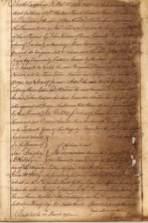
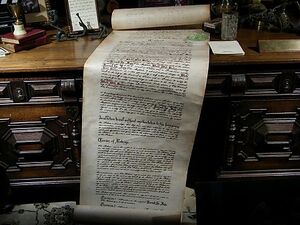
Slave Ship by Turner, via WikipediaI love the paintings of WIlliam Turner (1775–1851). Every January, the Vaughan bequest of Turner watercolours goes on display in the National Gallery of Ireland, and every January I spend a happy Saturday afternoon in their company. One of Turner’s most arresting paintings is The Slave Ship (Slavers throwing overboard the Dead and Dying — Typhoon coming on) (1840) which is now on display in the Museum of Fine Arts, Boston (thumbnail, left; click through for better image). It is inspired in part by the story of the slaveship The Zong (replica | image | story | wikipedia). In 1781, the shipowners claimed under an insurance contract for the value of lost cargo, which consisted of 133 slaves thrown overboard because the ship was running out of water. The captain claimed he acted out of necessity; and in the infamous case of Gregson v Gilbert (1783) 3 Doug 232, 99 ER 629, [1783] EngR 85 (22 May 1783) (pdf | National Archives), the claim succeeded at first instance, but failed on appeal.

Although this action was for breach of contract, it is the inspiration for the main action in last night’s episode of Garrow’s Law (BBC | imdb | wikipedia), a BBC television series inspired by the life and times of 18th century barrister William Garrow. The credits provide

In the late 18th Century William Garrow led a legal revolution

Championing the rights of prisoners in court

These stories are inspired by his life and the Old Bailey archives of the time.

On a BBC blog, Mark Pallis argues that without Garrow “there would be no such thing as a courtroom drama” because he “made a drama out of the trial out of necessity”. And in an article in the Guardian he explains:

Garrow’s Law is inspired by his life and the cases from the period. … The transcripts of … real Old Bailey cases have been used as inspiration in the series … [but it] is not a biographical documentary. It’s a drama that aims to give viewers a real sense of what life was like in legal London towards the end of the 18th century; to give people a chance to experience the big legal landmarks and the cases that caused a stir at the time. One such case was that of the slave ship Zong, from which [133] … Africans were thrown into the sea, leading to an insurance dispute. The idea that throwing slaves overboard was regarded by the law in the same way as throwing wood, horses or any other “cargo” overboard was shocking enough to serve as a recruitment aid for the anti-slavery movement.

While this case did not involve Garrow, he would doubtless have been aware of it – and we felt we simply wouldn’t be doing justice to the period if we left it out, and so in our drama it is Garrow who tackles it. I like to think that, given Garrow’s personal policy of refusing to defend slavers, and the fact that, later in his life, he oversaw the first prosecution under the Abolition of the Slave Trade Act of 1807, he would have been happy with the episode.

Although the actual action in Gregson v Gilbert was to enforce the insurance contract, in last night’s episode of Garrow’s Law, the insurance company has honoured the loss to the tune of £4000, but repented of it, and seeks to enlist Garrow as counsel to prosecute the captain of the ship for fraud. Hence, the historical civil action becomes a fictional criminal one, and Garrow is on the side of the angels (or at least not on the side of the devilish slave trade). The television show

‘moved’ the case to the Old Bailey, and made it criminal rather than civil so that it would be part of Garrow’s world. Despite this change, the key issues involved in the two cases are identical.

In the episode, the abilities of the captain were called into question at trial (as they were in the civil case), and Gustavas Vassa gave harrowing evidence of the middle passage (a fictional addition). However, it was not until James Kelsall, former first mate of the Zong, gave evidence that it had rained during the voyage before the slaves were thrown overboard that the trial plainly swung in Garrow’s favour. The jury accepted the evidence; and the captain was duly convicted. This evidence is fictional. However, in the appeal in the civil action, Lord Mansfield held that the ship-owners could not claim insurance on the slaves because the lack of sufficient water demonstrated that the cargo had been badly managed. The point is the same, but the television dramatisation makes it in a far more sensational manner. In any event, the case graphically demonstrated the ill-treatment of slaves being transported from Africa to the Americas, and greatly contributed to the abolition movement. Indeed, at the end of the episode, Garrow expresses to Vassa the “hope the country will make its own verdict” on slavery. It soon would, and not before time.

The trial scenes are powerful television, bringing home the appalling human misery behind the dry commercial realities of an insurance contract. As for Turner’s painting:

the critic John Ruskin, the first owner of Slave Ship, wrote, “If I were reduced to rest Turner’s immortality upon any single work, I should choose this.”

Comments 3 Comments »

Stefan Vogenauer, via Oxford University websiteProfessor Stefan Vogenauer (University of Oxford) (pictured left) will give the winter lecture for the Irish Society of Comparative Law (ISCL) at 5:00pm on Thursday, 11 November 2010, in the Swift Lecture Theatre, Room 2041A Arts Block, Trinity College Dublin (map here). His title is:

The Theory and Practice of Using Comparative Law in the Harmonisation of Private Law: the Case of Release of Contractual Rights.

Professor Vogenauer is Professor of Comparative Law at the University of Oxford, a Fellow of Brasenose College Oxford, and Director of the Oxford Institute of European and Comparative Law (IECL). His research interests lie mainly in the areas of comparative law, private law, international uniform law, European legal history and legal method. For his comparative and historical analysis of the interpretation of statutes in English, French, German and EU law, Die Auslegung von Gesetzen in England und auf dem Kontinent (Verlag Mohr Siebeck, Tübingen 2001, 2 vols), he was awarded the Max Weber Prize of the Bavarian Academy of Sciences and Humanities and the Otto Hahn Medal of the Max Planck Society in 2002, as well as the 2008 Prize of the German Legal History Conference. More recently, the Arts and Humanities Research Council (AHRC) awarded him approximately £350,000 to for a research project on ‘The Common Frame of Reference on European Contract Law in the Context of English and German Law’, which will explore the relationship between the recently published Common Frame of Reference and the contract laws of EU member states, as exemplified by German and English law. His ISCL lecture forms part of this larger work.

The ISCL encourages the comparative study of law and legal systems, and it seeks affiliation with individuals and organisations with complementary aims. As well as organising an annual winter lecture, it organises an annual conference. The next such event will take place at University College Dublin on 29-30 April 2011. The 2012 event will take place on 2-3 March 2012 at University College Cork.

Comments 1 Comment »

York University law, via their website.Omar Ha-Redeye has blogged on Slaw about an Ontario CA decision that is very relevant to the judicial review proceedings being taken by Andrew Croskery to challenge his degree results in Queen’s University Belfast (on which I have previously blogged: 1, 2, 3). The gravamen of those posts was that courts are slow to disturb substantive academic decisions, though beyond that sphere, they will of course give effect to claims in tort or for breach of contract. This distinction is at the heart of the case at issue in Omar’s blogpost: Jaffer v York University 2010 ONCA 654 (7 October 2010).

In this case, the plaintiff challenged a decision to exclude him at the end of his first year because he had not maintained a sufficient grade average, on the grounds that the university had failed to make proper accommodation for his Trisomy 21 (Down’s Syndrome) and that he had detrimentally relied on an alleged promise by a professor to defer his status while the dispute over disability was resolved. His claim failed at first instance, in part on the ground that, “[w]hile there may be contractual or tortious issues within the broader claim, if the pith and substance of the impugned conduct is academic in nature, the action cannot be continued in the courts” ([24] Pitt J). This does not seem surprising, since the proposition that the Courts will be slow to interfere in matters of purely academic judgment is well-established as a matter of Canadian law (see, eg, Harelkin v University of Regina 1979 CanLII 18 (SCC), [1979] 2 SCR 561 (30 March 1979); followed in Ontario in Paine v University of Toronto (1982) 34 OR (2d) 770 (Ont CA) and Gauthier v Saint-Germain 2010 ONCA 309 (CanLII) (3 May 2010) ([30]-[31], [46], [50] Rouleau jca, en français)).

On the other hand, in Gauthier, Rouleau jca pointed out that since the relationship between a student and university is, of its nature, contractual, it can give rise to obligations both in contract and in tort ([32]-[33], [46]) and the court does not lack jurisdiction solely because the claim arises out of a dispute of an academic nature ([45]). This, too, is well established in Canadian law (Young v Bella 2006 SCC 3 (CanLII), [2006] 1 SCR 108 (27 January 2006)). As ever, the question is not so much about the line as to the side of it on which any given case might fall.

In the appeal in Jaffer, Karakatsanis JA held that Rouleau jca’s judgment in Gauthier “clarified that the decisions of this court upholding the dismissal of claims relating to academic matters did not do so on the basis that the court lacked jurisdiction …, but rather … because the pleadings did not disclose a reasonable cause of action based upon contract, tort, or negligence or … because the cause of action was untenable in law” ([22]). In other words, the proper judicial deference to academic decisions does not deprive the court of jurisdiction, but it does mean that the plaintiff has no exigible claim.

Hence, the question in Jaffer was not whether the dispute was academic in nature, but rather whether the pleadings support a cause of action in either contract or tort ([31]). Unlike Pitt J at first instance, Karakatsanis JA for the Court of Appeal held that appellant’s various claims did not implicate purely academic judgments, so she considered the breach of contract and negligent misrepresenation issues, and found them both wanting. In other words, the distinction between Pitt J and the Court of Appeal turned on the characterisation of the issues as purely academic or not. Unlike Pitt J, Karakatsanis JA held that the issues were not purely academic, and thus went on to consider whether there was a breach of contract or a tort. She found that there was no basis in the facts pleaded upon which to find that accommodation was an express or implied term of the contract between the university and Jaffer, and thus dismissed the breach of contract claim. She also found that the professor’s offer did not constitute a misrepresentation and that there was no causal link between the allged misrepresentation and the damages claimed, so she also dismissed the misrepresentation claim. However, she did allow the appeal to the extent of permitting Jaffer to amend the Statement of Claim to plead the breach of contract and negligent misrepresentation issues with greater particularity.

On this approach, the question which would arise in Andrew Croskery’s application is whether the matter is one of purely academic judgment. If it is, then the Court will not lack jurisdiction but it will be particularly slow to hold against the university. If it is not, then the court can go on to consider his substantive claims. I await Mr Justice Treacy’s decision with interest.

Comments 3 Comments »

Queen's University Belfast, via wikipediaFurther to my two previous posts concerning student challenges to degree classification, there is a piece in this week’s Times Higher Education on the judicial review proceedings taken by Andrew Croskery challenging his degree results in Queen’s University Belfast. The piece contains some interesting reactions to the challenge [with added links]:

Grievance poses academy ‘threat’

Bahram Bekhradnia, director of the Higher Education Policy Institute, warned that if the case were successful it could unleash a wave of similar challenges. “Of course it is important that universities do right by students. But if a student feels they are getting inadequate supervision, contact or anything else, they should deal with it up front and at the time. Otherwise the floodgates will be opened and it will be impossible to judge genuine cases from chancers,” he said.

Roger Brown, professor of higher education policy at Liverpool Hope University, described the case as a battle between academic authority and the marketisation of higher education. He said a ruling in favour of Mr Croskery would be “disastrous” because it would undermine universities’ academic authority. He noted that legal challenges of college grades were quite common in the US but said British courts had taken the view in similar previous cases that universities were in the best position to make academic judgements.

Richard Langley, head of litigation and dispute resolution at law firm Bircham Dyson Bell, said Mr Croskery would have an “uphill struggle” to prove that the university had acted irrationally in not increasing his grade. “It involves a very subjective judgement and it is impossible to determine what he would have got with different supervision,” he said. He also warned that, at best, the judge would require the university to reconsider its decision, which it may uphold. …

Comments 2 Comments »


St Cross Buidling, which houses the Faculty of Law, University of Oxford, via their website

No sooner had I published yesterday’s post on student challenges to degree classification, and examiners’ academic freedom, than Afua Hirsh blogged that it’s not just law students who are learning how to sue. Against the background of the QUB case which I discussed in that post, she gave many other examples of cases in which students sued their universities because they had performed poorly in their degrees. (Indeed, yet another may be brewing here). In many of the cases Afua discusses, the students were successful in their claims. But probably the most important case she discusses concerned a Belgian DPhil student who claimed £3m from Oxford University for failing his thesis. George Van Mellaert complained about the examiners and about the university’s procedures. Unlike many of the other cases to which Afua referred, this case did not have a happy outcome for the student. As she said:

The court was less impressed with this claim, stating that “the claimant’s thesis is a matter of academic judgment with which it would be inappropriate for the court to interfere”.

Almost as soon as I had finished reading her article, I received an email from Martin George, with the full text of the decision in George van Mellaert v Oxford University [2006] EWHC 1565 (QB) (29 June 2006). I’m very grateful to him for having done so, and I in turn make it available here (pdf) Read the rest of this entry »

Comments 6 Comments »

ECIT building, QUB, via the QUB websiteSome time ago, I blogged about the question of whether a low mark is a breach of contract. A little while ago, in a gallimaufry (omnibus) post, I briefly returned to this issue. The context was a US case, Keefe v New York Law School (17 November 2009), but now it seems that the issue has arisen rather closer to home. Yesterday’s Irish Times tells the story:

Graduate takes university to court over degree results

A Queen’s University [Belfast] graduate yesterday launched a High Court challenge to his degree classification. In one of the first cases of its kind, Andrew Croskery has brought judicial review proceedings over his lower second-class honours classification.

Mr Croskery, from Co Down, claims if he had received better supervision he would have instead obtained an upper second-class in his electrical engineering degree.

Read more here.

There is similar coverage on the BBC and UTV; in the Belfast Telegraph, Cherwell, the Guardian (also here, on the Human Rights in Ireland blog), and the Mirror; and commentary on the Cantakerous, Gullibility, and Learning Architecture blogs. Update: Slugger O’Toole’s post has the QUB regulations at issue.

The New York and Belfast cases raise two important issues. First, at private law, when can there be a contract between a student and a university, and as a matter of policy will the courts get involved in purely academic matters to determine whether the contract has been breached? Gullibility argues strongly that the metaphor of students as customers is misleading, and that Andrew Croskery’s case should be dismissed.

Second, universities in the UK – and, for that matter, Ireland – have more of a public flavour than US colleges normally have, the question arises as to whether they are subject to judicial review, and if so, whether the courts will as a matter of policy accord significant deference to purely academic matters.

Whether at public law or at private law, a judicial policy of declining to get involved in purely academic decisions respects the academic freedom of the university and the examiners to make academic decisions. Provided that the appropriate procedures have been followed, the courts are very slow to go behind substantive academic decisions. The classic US cases are Board of Curators, University of Missouri v Horowitz 435 US 78 (1978) and University of Michigan v Ewing 474 US 214 (1985); (and see eg Douglas Rush “Through the Looking Glass: Judicial Deference to Academic Decision Makers …” bepress esp Part III). An extremely strong version of this judicial deference can be discerned in the Irish High Court in Quinn v Honourable Society of King’s Inns [2004] IEHC 220 (15 June 2004) in which Smyth J declined to give the applicant leave to challenge an exam grade. The reports do not make clear whether counsel for QUB referred to this case, though he did argue that the judicial review application should be dismissed as the court was not the proper forum for the challenge. Mr Justice Treacy adjourned the application and will give his decision on the application for leave to commence judicial review proceedings next month.

I await judgment with great interest, and some trepidation. Doubtless I will blog about it when it is handed down. Now, in the meantime, perhaps I had better reconsider my marking techniques!

Comments 7 Comments »

GallimaufryDr Johnson defined gallimaufry as

1. A hoch-poch …
2. Any inconsistent or ridiculous medley. …

Here’s another hoch-poch, or hotch-potch (though, of course, not a hotchpot) of links relevant to the themes of this blog that have caught my eye over the last while, including: unjust enrichment, research integrity, breach of contract, slavery, good samaritans, and privacy.
Read the rest of this entry »

Comments 1 Comment »

'Oxford Comma' single cover, by Vampire Weekend, via their siteSome stuff I’ve come across online recently has reminded me of the New York indie rock band, Vampire Weekend, not only the high-profile controversy over the “frustratinglawsuit against them by a model who claims that they did not have her permission to use an image of her on their “Contra” album cover, but also the lyrics of their 2008 single “Oxford Comma” (pictured left; see background | lyrics | music | YouTube). The Oxford comma is an optional comma before the word ‘and’ at the end of a list; in the song, it’s a metaphor for unnecessary pretention in interpersonal relationships; and in its grammatical meaning it has recently been the focus of discussion by pedants, geeks, and drafters.
Read the rest of this entry »

Comments 5 Comments »

Creative Commons Attribution-NonCommercial-ShareAlike 3.0 Unported
This work by Eoin O Dell is licensed under a Creative Commons Attribution-NonCommercial-ShareAlike 3.0 Unported.