Archive for the “Litigation” Category
In March, I blogged about the dubious legality of the second Employment Control Framework, which the outgoing government had introduced to control employment in the third level sector. It was misguided and controversial (eg, Liam Delaney here, and here | Dermot Frost | Bernie Goldbach | Aidan Kane | Stephen Kinsella | Rob Kitchen | James McInerney | Donncha O’Connell | Stefano Sanvito | Ferdinand von Prondzynski, passim, but esp here, here, and here). After some discord and delay, that framework has now, it seems, been greatly revised to resolve many of the contentious issues (see Revised ECF 2011-2014 June 2011 (pdf)).
Tom Boland, Chief Executive of the Higher Education Authority, said that the revised Framework “provides reasonable flexibility to the higher education institutions to manage their staffing requirements”; and the public response has been largely positive. For example, in today’s Irish Independent Katherine Donnelly writes that Ministers softened their approach after an outcry from colleges about ‘Soviet-style’ controls, which greeted the original proposals published earlier this year. Again, in today’s Irish Times, Sean Flynn points out that the revised framework removes the onus on colleges to notify the Higher Education Authority of appointments which are funded from external sources, and gives colleges additional flexibility on promotional posts. And, in today’s Irish Examiner, Niall Murray reports that Mike Jennings, general secretary of the Irish Federation of University Teachers accorded the revision a cautious welcome. Similarly, Ned Costello, Chief Executive of the Irish Universities Association, said that “the revisions acknowledge that the response to the national financial crisis must be balanced by according universities the flexibility to manage their resources to best effect”. Moreover, über-critic Ferdinand von Prondzynski concluded:
The new revised framework is still not entirely unproblematical, but most of the objectionable aspects of the original have now been removed. This is a welcome development for the higher education system.
This is all well and good, but whilst the new framework addresses many substantive concerns, my doubts about its legality remain. Although it seems likely that the necessary ministerial consents were obtained this time around, I am not convinced that the still-expansive framework is justified by the provisions of the Universities Act, 1997. Nevertheless, since the sector is prepared to live with the new framework, its legal dubieties are likely to go unchallenged.
1 Comment »
Burnett J’s judgment in Abramova v Oxford Institute of Legal Practice [2011] EWHC 613 (QB) (18 March 2011) – about which I blogged last week – is now available on BAILII. The Oxford Institute for Legal Practice successfully defended this case. On the other side of the line is Mike Austen who received £30,000 from the University of Wolverhampton in an out-of-court settlement in 2002. More and more students are now taking such cases. The Scotsman on the weekend reported recent Scottish examples of the phenomenon. Extract, (with added links):
By Fiona MacLeod, Education Correspondent
GROWING numbers of students in Scotland are taking legal action against their universities for failing to provide adequate support for degree courses. Six students across the country have taken out cases after receiving lower grades than they expected, according to the legal firm Ross Harper.
A spokesman for the firm said it was dealing with four cases of former students seeking legal action against their university, and added that a further two had settled through the institution’s own grievance procedure. The spokesman said that students now see themselves more as consumers of services and were more likely to complain when they believed university courses were sub-standard. Read the rest of this entry »
1 Comment »
After Andrew Croskery and Tony Chinedu Wogu comes Maria Abramova (Above the Law | BBC | Cherwell | Legal Week | Mirror | Oxford Mail | Oxford Times | The Lawyer | PA). In Abramova v Oxford Institute of Legal Practice [2011] EWHC 613 (QB) (18 March 2011) (pdf), the plaintiff sued the Oxford Institute of Legal Practice (OxILP) for £100,000 for negligence and breach of contract, but Burnett J dismissed her claim. Her case is the latest example of the increasingly frequent phenomenon of the litigious student, and it raises some very important legal issues.
An important threshold question in such cases is whether the matter can be litigated at all. There is judicial deference to matters of academic freedom, so the courts are very slow to interfere in matters of purely academic judgment, and generally regard such matters as unsuitable for adjudication in the courts (Harelkin v University of Regina 1979 CanLII 18 (SCC), [1979] 2 SCR 561 (30 March 1979); Clark v University of Lincolnshire & Humberside [2000] 1 WLR 1988, [2000] EWCA Civ 129 (14 April 2000); George van Mellaert v Oxford University [2006] EWHC 1565 (QB) (29 June 2006) (pdf) (blogged here); Re Croskery [2010] NIQB 129 (8 December 2010) (blogged here)).
Nevertheless, as Julian Sladdin recently pointed out “… Students rarely think of it like this, but there is a contract between them and their universities”, and this relationship can give rise to obligations both in contract and in tort (Gauthier v Saint-Germain 2010 ONCA 309 (CanLII) (3 May 2010), Jaffer v York University 2010 ONCA 654 (7 October 2010) (blogged here and here)). In such cases, the courts do not lack jurisdiction solely because the claim arises out of a dispute of an academic nature (Young v Bella 2006 SCC 3 (CanLII), [2006] 1 SCR 108 (27 January 2006)).
Hence, breach of a contractual promise to provide a facility or service or procedure can be litigated, but the courts will be slow to cross the line into second-guessing questions of academic judgment.
As to the formation of the contract and its terms, Sladdin argues that “when a university makes an offer, and it is accepted, a contract is formed, incorporating all sorts of documents including the student handbook and regulations”. This may overstate the case, as not every such document will always amount to a contract (see, eg, Tansey v College of Occupational Therapists Ltd [1995] 2 ILRM 601, [1986] IEHC 2 (27 August 1986)). So, in a recent US case, Keefe v New York Law School (17 November 2009) York J held that general statements of policy in a school’s bulletins, circulars, catalogues, handbooks and website are not sufficient to create a contract between a student and law school. In his view, only specific promises that are material to the student’s relationship with the school can establish the existence of a contract.
Nevertheless, despite questions of judicial deference to academic judgment and difficulties in establishing that every piece of paper is incorporated into the contract between the college and the student, there is still considerable scope within which to found a claim that a contract existed and was breached. And it was in this space that Ambrova sought to make her claim against OxILP. Read the rest of this entry »
1 Comment »
On 26 March 2009, the Minister for Finance confirmed that the Government had decided to implement a moratorium on public service recruitment, precluding recruitment, promotion, renewal of fixed-term contracts, or payment of an allowance for the performance of duties at a higher grade. The standard letter sent to the various government departments emphasised that exceptions to this principle would arise only in very limited circumstances and would require the prior sanction of the Minister for Finance. There were additional rules for Education and Health, and these were supplemented for the third level sector by a controversial Employment Control Framework. That framework has now run its course, but news has seeped out over the course of the weekend that, in one of his last acts before leaving office, Brian Lenihan, the outgoing Minister for Finance, last week sanctioned a successor Employment Control Framework. It has been been much derided on Twitter at #ecf11, and it has drawn a chorus of detailed criticism from Des Fitzgerald, Ferdinand von Prondzynski, Colm Kearney, Paul Walsh, Dermot Frost, and Donncha O’Connell. For a bunch of academics, the unanimity is extraordinary. All are agreed that this new Framework is a thoroughly bad idea. I agree too, but I would go further. I think that it is also of dubious legality.

At least two questions arise. First, did the Minister for Finance have the legislative authority to sanction the Framework. Second, even if he did, is the Framework a valid exercise of that authority. Read the rest of this entry »
3 Comments »
After Andrew Croskery comes Tony Chinedu Wogu. According to the Daily Telegraph and The Register, Tony Chinedu Wogu has failed in his bid to sue the University of Bradford for £5m compensation, alleging that a 2:2 and not a First in Computing Science was the result of discrimination and breach of contract. Judge Andrew Collender QC struck out his case, saying academics had a much better understanding of the quality of a student’s work than lawyers did. As Treacy J had done in Croskery, Collender QC pointed out that Mr Wogu he could seek judicial review of the university’s decision to award him a 2:2, but only after he had exhausted his internal appeals. Moreover, he reasserted the principle of judicial deference to matters of purely academic judgment (as opposed to breaches of procedure):
This court has the most limited of powers to interfere in such a decision. This court has not the power or expertise to simply examine or to determine the proper degree grade to which the claimant would have been entitled from the University of Bradford. That is a decision particularly within the scope of an academic institution. It would not be for this court to apply its judgment as to the degree level reached and substitute that for the university’s … and the defendants’ application to strike out is successful.
2 Comments »
Tenure:
the very word connotes safety, security, and a sense that you have made it in academia. But is the system really all it is cracked up to be, or is it lumbering into the world of 21st century academia like a dinosaur that hasn’t heard it is supposed to be extinct?
In earlier posts on this blog, I have looked at various issues relating to the various legal protections of academic freedom and at the concomitant concept of academic tenure as a matter of principle. In today’s post, I want to look at it as a matter of law.
The starting point is the Universities Act, 1997. Section 25(6) (also here) of the Act provides (with added emphasis):
A university may suspend or dismiss any employee but only in accordance with procedures, and subject to any conditions, specified in a statute made following consultation through normal industrial relations structures operating in the university with recognised staff associations or trade unions, which procedures or conditions may provide for the delegation of powers relating to suspension or dismissal to the chief officer and shall provide for the tenure of officers.
The Statutes of a university constitute its basic law, and section 3 of the 1997 Act (also here) provides that “officer[s]” include “permanent, full-time member[s] of the academic staff of the university”. Hence, section 25(6) effectively requires that each university’s statutes must only specify disciplinary procedures leading to the suspension or dismissal for their employees, but must also provide for tenure of full-time members of academic staff. This rider to section 25(6) is very important. Dismissal procedures be set out in universities’ fundamental constitutional documents, and where such procedures affect full-time members of the academic staff, they must specifically provide for tenure. This is a strong legislative commitment to the principle of academic tenure. As with the Act’s comcomitant protection of academic freedom, there are very few similar general legislative provisions elsewhere. In this respect at least, Irish legislation is particularly progressive, and – as Prof Jim McKernan, formerly of UCD and UL, and now of the College of Education in East Carolina University, has recently argued on Ninth Level Ireland – these freedoms must be jealously guarded and zealously protected:
Academic freedom is the right of the faculty member to select one’s materials, methods, pedagogy and points of view in teaching one’s discipline. … Academic freedom is an absolute necessity for a democratic society. … Faculty need to be free of the constraints of censorship and interference in the conduct of their duties by the institution or other agents and agencies in the community.
… Faculty members, after a probationary period have a property right to their position and cannot be removed barring ‘just cause’. Tenure does not guarantee a post for life. When I was first appointed at UCD in 1981 there was one condition in my contract letter for removal-being guilty of ‘gross moral turpitude’. Irish academics had real tenure in those days. I do not know if new conditions for removal of tenured faculty have been introduced. … Tenure really means that one ‘owns their position’ and the right to return to that position year after year after the probationary period. … Tenure secures a working community of scholars based on accepted academic values and aims, and it guarantees that a person cannot be dismissed from that community without due process and without consideration based on well established objective academic criteria. As it turns out, the truth is not always popular, especially within circles of power and wealth. Remove the system of tenure and we shall witness a ‘Flight of the Dons’. …
The answer to Jim’s question in bold about the current state of tenure in Irish universities is in three parts. Read the rest of this entry »
6 Comments »
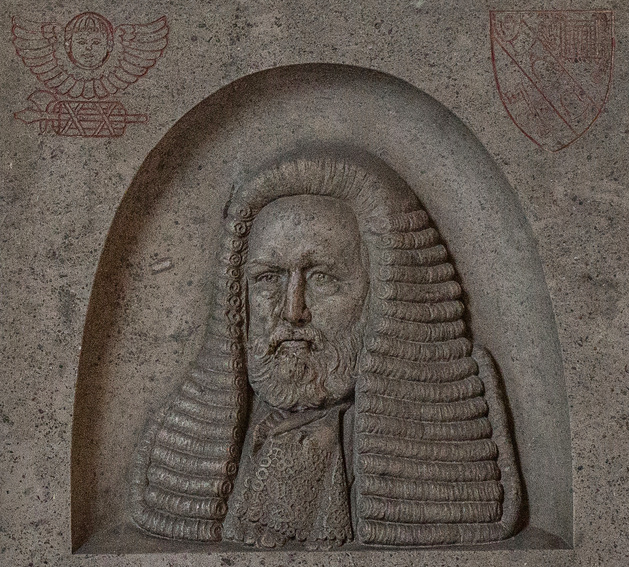
On this blog last year, I discussed the circumstances in which a university student could challenge a grade in court. Just before Christmas, the Northern Ireland High Court handed down a very important judgment on this issue. In Re Croskery [2010] NIQB 129 (8 December 2010), the applicant, Andrew Croskery, sought leave to apply for judicial review against a refusal by Queens University Belfast to reclassify his degree. In the Queen’s Bench Division of the Northern Ireland High Court (pictured left), Treacy J denied the application. In cases of this kind, where an objection is simply to matters of academic judgment, the courts show great deference to such matters, and are very slow to interfere. The deference is stated in different ways in the cases, and the parties accepted a strong form of it in Croskery. As Treacy J held
on the authority of Re Wislang’s Application [1984] NI 63 (.doc) and Thomas v University of Bradford [1987] AC 795 (.doc) the matters in dispute would presently fall exclusively within the visitorial jurisdiction of the university – subject only to the possibility that any ultimate decision of the Board of Visitors might itself be judicially reviewable. [emphasis in original]
Given the extreme reluctance on the part of the courts go behind purely academic decisions, the best strategy for an applicant is to object to a different matter, not to the academic judgment but the procedures that led to it or to the subsequent appeal procedures. The two main routes to put such procedures in issue are to seek judicial review or to allege that the failure to follow them constituted a breach of contract (and such claims are becoming increasingly common). The applicant in Croskery sought judicial review. Some internal procedures were still available to the applicant, up to and including the Board of Visitors [in England and Wales, the Visitorial jurisdiction has been replaced by the Office of the Independent Adjudicator], but he sought to argue that Article 6 of the European Convention on Human Rights applied to ensure that such hearings complied with Article 6, so that, in particular, that he will have the benefit of legal representation. His essential argument was that the decisions in Wislang and Thomas could no longer be regarded as sound law because of the application of Article 6 of the Convention. It provides, in pertinent part:
In the determination of his civil rights and obligations … everyone is entitled to a fair … hearing … by [a] … tribunal …
Applying Andre Simpson v UK 14688/89 (Commission decision of 4 December 1989) and Hanuman v UK 56965/00 (admissibility decision) [2000] ELR 685, and distinguishing Emine Arac v Turkey 9907/02 [2008] ECHR 1883 (23 September 2008), Treacy J held that there was nothing in the caselaw of the European Court of Human Rights
to support the proposition that the assessments and/or the procedures for determining disputed degree assessments and classifications fall within Article 6. The assessments themselves are plainly a matter of academic specialised judgment and whilst the outcome of the procedures for determining disputed classifications is a matter of considerable import for an individual they are not concerned … with determining rights of access or any other civil right within the meaning of Art 6. The assessments and, more importantly for present purposes, the reviewing supervision of the relevant subject Board of Examiners, which is made up of senior academics in the relevant subject field, does not, in my view, involve the determination of any civil right … [emphasis added]
The applicant also relied on Article 2 of the First Protocol to the Convention, providing that “No person shall be denied the right to education”, but Treacy J held this right had not been denied; rather, the applicant has had access to and has exercised his right to third level education. Moreover, Treacy J held that the Article “says nothing about rights to degrees or other academic qualifications much less to their academic assessment” and therefore did not apply in this case.
As a consequence, since neither Article of the Convention was engaged, the matter remained exclusively within the jurisdiction of the Board of Visitors, Wislang and Thomas applied, and the application for leave to apply for judicial review was refused.
3 Comments »
It’s being reported that Andrew Croskery has failed in his bid to review the 2:2 engineering degree he was awarded by Queen’s University Belfast. According to the BBC:
A judge refuses leave for a judicial review of decisions made by Queen’s University over a graduate’s disputed degree classification.
Andrew Croskery, from County Down, was seeking leave for a review of decisions made by the university’s Board of Examiners. But a High Court judge ruled the case should remain exclusively within the jurisdiction of Queen’s appeals body. …
Mr Justice Treacy said that even if this confirmed the existing classification, two further rights of appeal were open to Mr Croskery. He can take his challenge to the University’s Central Students Appeals Committee, and to a Board of Visitors. …
According to the UTV news website, Mr Justice Treacy concluded: “The matter in dispute remains exclusively within the jurisdiction of the Board of Visitors.” And, according to the RTÉ news website, Queen’s has said it will convene a further hearing of the Board of Examiners to study the case. When the judgment is available on the NI Courts & Tribunals website or Bailii, I’ll return to this case. In the meantime, it seems to be a welcome endorsement of the view that the courts should be slow to become embroiled in matters of purely academic judgment.
Updates (9 December 2010): Belfast Telegraph | Irish Times
Updates (10 December 2010): Education Law Blog | iLawBlog
1 Comment »
|
|