Archive for the “Blasphemy” Category

In an earlier post, I suggested a wording for a complete revision of Article 40.6.1(i) of the Constitution. That makes a recent Irish Times poll very interesting:


Irish Times Poll


65% would support a referendum to remove the reference to blasphemy from the Constitution. So, how about it, Minister?

Comments 2 Comments »

Cover of Depeche Mode single 'Blasphemous Rumours' via their website; linked to the video of the songThe free speech guarantee in Article 40.6.1(i) of the Constitution is a fragile freedom, much to the inglorious discredit of Irish democracy. However, there is a slim chance that the controversy over the blasphemy provisions in Part 5 of the newly-commenced Defamation Act, 2009 might provide an opportunity to replace the current text of Article 40.6.1(i) with something rather more robust. Consequently, much more in hope than expectation, this post concludes with a suggestion for a replacement text, on which I would welcome any comments and suggestions.

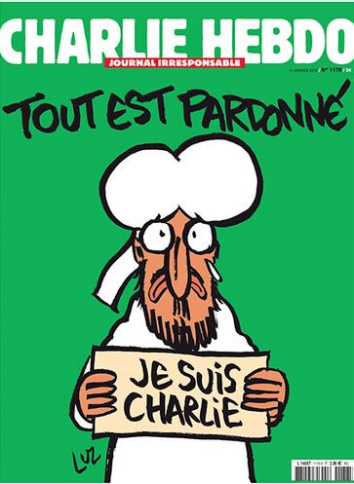
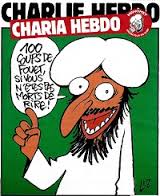
But first, the context. The blasphemy provisions in the 2009 Act are provoking quite a bit of commentary in the media, both in Ireland (Sunday Independent | Sunday Tribune | Irish Times here and here | Sunday TImes) and abroad (BBC | CNN | Guardian | MSNBC | New York Daily News | Sydney Morning Herald | Washington Post). Even the Drudge Report has commented on the story; and there are more here). I particularly like the Post piece, because I’m quoted in it. More seriously, much of the coverage revolves around the publication by Atheist Ireland of 25 potentially blasphemous quotations in the hope of provoking a prosecution; and they’ve opened an online petition to challenge the blasphemy provisions of the 2009 Act. As Fiona argues here and here, it is actually rather difficult to commit the offence. Difficult perhaps, but not impossible – it’s unlikely that Atheist Ireland’s 25 quotes do so, though this poem has been found to be blasphemous, and questions have been seriously raised about this cartoon.

The Minister’s justification for the offence was that the last line of Article 40.6.1(i) of the Constitution provides that the “publication or utterance of blasphemous … matter is an offence which shall be punishable in accordance with law”. There have been some calls to amend this provision; but, according to the Sunday TImes, a spokesman for the Department of Justice said:

The minister is quite happy to have a referendum to remove the reference to blasphemy from the constitution, but doesn’t believe that should be done this year, given the other serious challenges facing the country.

The First Report of the Joint Oireachtas Committee on the Constitution (July 2008) concerned freedom of expression in Article 40.6.1(i) with a particular focus on blasphemy. As I noted at the time, the Committee that the Article is unsatisfactory and drafted in such a way that the limitations on free speech are accorded undue prominence, and recommended that it therefore be amended along the lines of European Convention on Human Rights. However, the Committee went and spoiled it all by concluding that the amendment was not immediately necessary, but should be undertaken when an appropriate opportunity presented itself.

If there is to be amendment to Article 40.6.1(i), I think it should go considerably further than removing the reference to blasphemy in the last sentence of Article 40.6.1(i), or even removing that last sentence itself. Like the Joint Oireachtas Committee, I think that the entire article should be replaced; but I think we should go even further than that. In my submission to the Committee, I argued that Article 10 should be a starting point but not the end point, and I provided an alternative text:

Everyone has the right to freedom of thought, belief, speech and expression. This right includes the freedom to seek, receive, hold and impart convictions, opinions, information and ideas of any kind in any form without interference by public authority. This right also includes the freedom of the press and other media of communication.

The exercise of these freedoms, since it carries with it duties and responsibilities, may be subject to such necessary limits as are prescribed by law and proportionate only to the interests of national security, territorial integrity, public safety or the common good, the prevention of disorder or crime, the protection of health or morals, the protection of the reputation or the rights of others, preventing the disclosure of information entitled to a reasonable expectation of privacy or otherwise received in confidence, or maintaining the authority and impartiality of the judiciary.

Comments, please, on this suggestion.

Comments 8 Comments »

Cover of Bezanson's Randall P Bezanson has just pubished another very important book on on Art and Freedom of Speech (University of Illinois Press, 2009), exploring the decisions of the US Supreme Court relating to artistic expression under the First Amendment. From the abstract:

… In considering the transformative meaning of art, the importance of community judgments, and the definition of speech in Court rulings, Bezanson focuses on the fundamental questions underlying the discussion of art as protected free speech: What are the boundaries of art? What are the limits on the government’s role as supporter and “patron” of the arts? And what role, if any, may core social values of decency, respect, and equality play in limiting the production or distribution of art?

Accessibly written and evocatively argued, Art and Freedom of Speech explores these questions and concludes with the argument that, for legal purposes, art should be absolutely free under the First Amendment–in fact, even more free than other forms of speech.

In matters that have recently featured on this blog, his views on blasphemy (discussed here) and treaspassory art (discussed here) will resonate with our recent blasphemy and Cowengate controversies.

Mark Tushnet has written an excellent discussion of Bezanson’s book. Posing the question “Why exactly are Jackson Pollock’s paintings protected by the First Amendment?”, he argues that

People should check their wallets whenever the Supreme Court takes some proposition as unquestionable. Randall Bezanson shows why. Every route that you might take to explain why non-representational art is covered by the First Amendment leads to mind-bending problems, and rather rapidly places some other unquestionable proposition about free speech under pretty severe pressure. …

This isn’t to say that Bezanson’s proposed solution to the problems posed for the First Amendment by non-representational art is satisfactory. He says that art should be absolutely protected against government sanction, even more so than propositional speech. … Bezanson sometimes seems to think that his absolute rule is tolerable because he would apply it only to serious art. … Early on, Andy Warhol’s work wasn’t “serious” enough. Now it’s central to the study of mid-twentieth century art, full stop. Rules that purport to make important differences turn on a distinction between serious art and unserious “art” are unlikely to succeed.

It’s worth reading Tushnet’s review in full, and then it’s worth reading Bezanson’s book too. It demonstrates that the most profound questions about freedom of expression are often raised not in the context of the participatory political process but in the contested field of human emotions. The problems outlined in the book are universal; the analysis may be centred on the First Amendment; but it will surely provide a sure guide if and when the issues come up in other courts on foot of other free speech guarantees.

Comments 1 Comment »

Department of Justice logo, via the Dept's siteAlison Healy, writing in today’s Irish Times, quotes a spokesperson for the Department of Justice as saying that

… no part of the [Defamation] Bill had come into force yet but the [Defamation] Act was expected to be commenced in January.

Healy continues that, whilst in July, the Department had said that the Act was expected to commence in October, the spokesperson confirmed that it is now expected to commence in January 2010. For earlier comments to the same effect, see Rossa McMahon (see also here).

Unfortunately, the headline is the far more sensationalist

Blasphemy law unlikely to come into force this year

Yes, the Defamation Act, 2009 (pdf) does indeed have provisions relating to blasphemy; yes, I’ve written quite a bit about those provisions on this blog; (and yes, international reaction (pdf) continues (pdf) to be negative); but there is far more to the Act than that. If you want to find out more, you could do worse than to attend this event.

Comments 2 Comments »

'Hello Divorce, Bye Bye Daddy' posterI’ve been putting some slides together for a talk I’m doing tonight at Ignite Dublin #1, and my colleague Dr Neville Cox provided me with the Sunday Independent cartoon which was the subject of the only attempt to prosecute mount a prosecution for blasphemy in Ireland since the adoption of the Constitution (Bunreacht na hÉireann) in 1937. The case is Corway v Independent Newspapers [1999] 4 IR 485; [2000] 1 ILRM 426; [1999] IESC 5 (30 July 1999). In the aftermath of the 1995 referendum which removed the constitutional ban on divorce, the Sunday Independent published an article by Dr Conor Cruise-O’Brien, on the implications of that referendum. The article was accompanied by this cartoon:


Progress

During the course of the campaign, those opposed to the amendment ran a powerful advertising campaign built around the slogan “Hello Divorce … Bye Bye Daddy …” (pdf; see the poster at the start of this post), and the cartoon’s caption was clearly a play upon that slogan. In Corway, the applicant wished to commence a prosecution for blasphemous libel against the cartoon and caption, on the grounds that they were calculated to insult the feelings and religious convictions of catholic readers by treating the sacrament of the Eucharist and its administration as objects of scorn and derision. However, under section 8 (also here) of the Defamation Act, 1961, the consent of a High Court judge was necessary to commence the prosecution, but both the High Court and the Supreme Court refused such leave. In the Supreme Court, Barrington J held that the common law crime of blasphemous libel was so uncertain that the constitutional mandate that blasphemy is offence punishable by law could not be given content, and therefore in effect declined to give leave to prosecute because there was no offence which could be prosecuted. Now, however, courtesy of Part 5 of the Defamation Act, 2009, there is indeed a clear offence of blasphemy:

36.—(1) A person who publishes or utters blasphemous matter shall be guilty of an offence and shall be liable upon conviction on indictment to a fine not exceeding €25,000.

(2) For the purposes of this section, a person publishes or utters blasphemous matter if—
(a) he or she publishes or utters matter that is grossly abusive or insulting in relation to matters held sacred by any religion, thereby causing outrage among a substantial number of the adherents of that religion, and
(b) he or she intends, by the publication or utterance of the matter concerned, to cause such outrage.

(3) It shall be a defence to proceedings for an offence under this section for the defendant to prove that a reasonable person would find genuine literary, artistic, political, scientific, or academic value in the matter to which the offence relates.

(4) In this section “religion” does not include an organisation or cult—
(a) the principal object of which is the making of profit, or
(b) that employs oppressive psychological manipulation—
(i) of its followers, or
(ii) for the purpose of gaining new followers.

So, for me, the interesting question is, now that there is once again an offence which could be prosecuted, whether the Corway cartoon would fall foul of section 36 of the 2009 Act? Mr Corway was plainly of the view that the cartoon is grossly abusive or insulting to matters held sacred by the Roman Catholic religion; indeed, he was outraged by it; but there is no evidence that this outrage was shared by a substantial number of his co-religionists. Let us nevertheless assume that outrage. The question would then be whether a reasonable person would think that the cartoon possessed some genuine literary, artistic, political value. Now, I think that it’s making a very important political point, but I may not be “reasonable” in the sense in which section 36(3) uses that phrase – so, what do you think? And, if context matters, even if the original publication does not benefit from the section 36(3) exception, would a reasonable person see the discussion here as political or academic? Let me know in the comments. Thanks.

Comments 4 Comments »

EHRLR cover, via ECHR BlogThe current issue of the European Human Rights Law Review ([2009] 3 EHRLR | table of contents (pdf) | hat tip ECHR blog) contains a wonderful piece by my colleague Dr Ewa Komorek entitled “Is Media Pluralism a Human Right? The European Court of Human Rights, the Council of Europe and the Issue of Media Pluralism” [2009] 3 EHRLR 395.

Here is the abstract (with added links):

The need for pluralist media stopped being purely a national concern a long time ago and thus it has for decades been subject to scrutiny by the Council of Europe and the European Court of Human Rights. Media pluralism has always come to their agenda as a prerequisite for freedom of expression guarded by Article 10 of the European Convention of Human Rights. It is important to distinguish the two ‘faces’ of media pluralism: internal (which may also be called content pluralism or diversity) and external (or structural). This article focuses on television broadcasting and argues that while the Court of Human Rights has essentially been successful in safeguarding internal pluralism, the protection of structural pluralism proved more difficult to achieve by means of the Court’s case law. This prompted the Council of Europe to step in and attempt to fill the gap with regulatory proposals. The conclusion is that although there is still a need for a binding ex ante action at the European level aimed at safeguarding pluralism in this ever concentrating sector, the efforts of the Council of Europe and the judgments of the European Court of Human Rights are vital for awareness raising and stimulating debate.

In Ewa’s view, therefore, media pluralism should be given a far stronger voice in European debates than it currently enjoys, and one way to achieve this would be to strength its status as a right not only in the Council of Europe but also in the EU. For example, Article 11(2) of the EU Charter of Fundamental Rights provides that “the freedom and pluralism of the media shall be respected”, and Ewa’s compelling analysis of the cognate Article 10 can go a long way towards giving full effect to this provision. But this is not the only interesting piece in the journal. Indeed, this issue is a veritable Aladdin’s Cave of fascinating articles: Read the rest of this entry »

Comments 2 Comments »

In The Godfather, Part III, Michael Corleone (played by Al Pacino) laments

Just when I thought I was out… they pull me back in.

I know how he feels (though without the mafia connections, obviously). I had intended yesterday’s post to be my last on blasphemy for some time, but then Eoin Daly, a PhD student in UCC, went and spoiled it all by writing an excellent guest post on CCJHR blog about the new offence; update and Michael Walsh, a law student at NUI Galway, has written a compelling post critiquing some of my earlier analysis on the issue. To being, some extracts from Eoin’s post:

The Pluralisation of Blasphemy law: Possible Constitutional Implications

Image of UCC Quad, via the UCC Law Faculty website… the most interesting aspect of the new offence [is] the fact that is has been “pluralised”, encompassing material that is “grossly abusive or insulting in relation to matters held sacred by any religion.” … blasphemy law has shifted from a religious to a secular legitimation, from the protection of a particular religious truth, to the protection of the sentiments of religious persons, of all recognised affiliations.

However, it is this very fact of a secular legitimation, of “outrage among a substantial number of [any religion’s] adherents”, which renders the contours of the offence unfeasibly vague. Read the rest of this entry »

Comments 4 Comments »

Blasphemy - The road to Hell has never been funnier.It’s a pity that Part 5 of the Defamation Act, 2009, relating to blasphemy, has dominated the coverage of the Act at home and abroad (eg, US, Denmark (pdf)), since the legislation does considerably more than that. It is radical modernisation of Ireland’s defamation laws, and is a vast improvement on what had gone before. In particular, it provides several means to ensure much speedier resolution of defamation cases; it provides for a new defence of reasonable publication; it significantly improves the law relating to damages in defamation cases; and it gives a stable statutory footing to the Press Council. These will be matters to which I will return on this blog; but, before that, I want to make another comment about Part 5 of the Act.

Part 5 of the Act consists of three sections. Section 35 abolishes the common law offences of defamatory libel, seditious libel and obscene libel are abolished. Section 36, subsections (1)-(2) create the new crime of blapshemy, by making it an offence to cause outrage among a substantial number of the adherents of a religion by intentionally publishing material that grossly abuses or insults matters held sacred by their religion. This is narrowed in two ways: subsection (3) provides a saver for publications of genuine literary, artistic, political, scientific, or academic value; and subsection (4) excludes from the definition of “religion” an organisation which principally aims to make a profit or which employs oppressive psychological manipulation. Finally, where there has been a conviction, section 37 (probably impotently) allows for the seizure of blasphemous matter.

This Part of the Act was introduced very late in the day, and was the subject of limited debate in the Oireachtas, but it is not a unique provision. Moreover, as I have already said, it is neither a trap for the unwary, nor a charter for religious cranks, nor even a check upon valuable public discourse; but there are still many problems with it. Read the rest of this entry »

Comments 3 Comments »

Creative Commons Attribution-NonCommercial-ShareAlike 3.0 Unported
This work by Eoin O Dell is licensed under a Creative Commons Attribution-NonCommercial-ShareAlike 3.0 Unported.